
Doggy Daycare in Henderson: 10 Surprising Benefits for Busy Dog Owners
October 1, 2026
Dogs Need a Best Friend Too
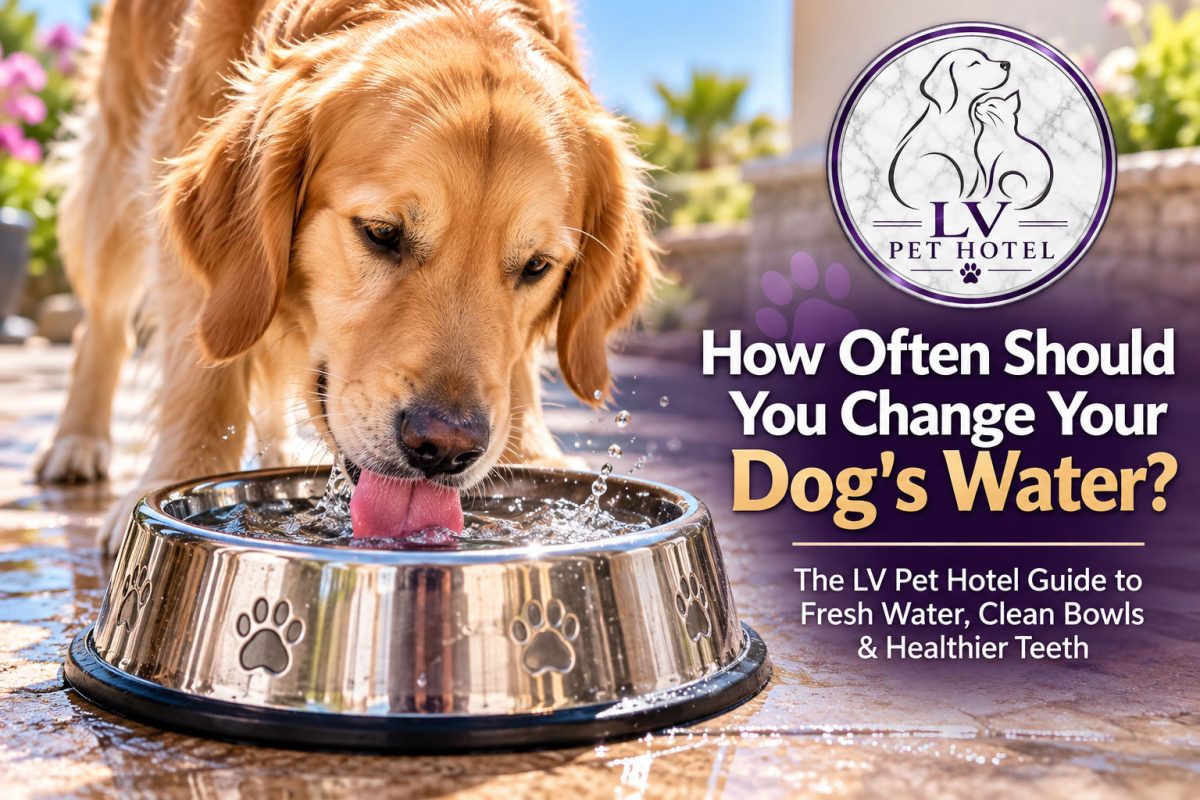
October 7, 2026How Often Should You Change Your Dog's Water? The LV Pet Hotel Guide to Fresh Water, Clean Bowls & Healthier Teeth
Why Fresh Water Matters More Than Most Pet Parents Think
Your dog’s water bowl is one of the dirtiest things in your home. A 2011 National Sanitation Foundation study ranked pet bowls fourth among the germiest household spots, and university research has called the dog water bowl the third most contaminated item in the home. Researchers testing dog water bowls found medically important bacteria, including MRSA and Salmonella. Other studies have found E. coli, yeast and mold.
The main culprit is biofilm, the slippery, slimy coating you feel when you run a finger along the inside of the bowl. Biofilm is a colony of bacteria wrapped in a protective slime the bacteria make themselves. It’s the same thing as plaque on teeth. A quick dump-and-refill doesn’t remove it, and neither does your dog licking the bowl clean. Only scrubbing does.
Hydration is the other half of the story. A healthy dog needs about 1 ounce of water per pound of body weight every day, and more in heat, after exercise or on a dry-food diet. If the water tastes stale or the bowl smells off, many dogs simply drink less.
How Much Water Does My Dog Need Each Day?
| Dog’s Weight | Daily Water (Approx.) | In Cups |
|---|---|---|
| 10 lb | 10 oz | 1¼ cups |
| 30 lb | 30 oz | 3¾ cups |
| 50 lb | 50 oz | 6¼ cups |
| 70 lb | 70 oz | 8¾ cups |
| 100 lb | 100 oz | 12½ cups |
In Las Vegas and Henderson heat, those numbers go up. Once temperatures climb above 80°F, dogs need water available more often and in larger amounts.
Why Large Dogs Need Even More Frequent Water Changes
Big dogs are the hardest on a water bowl, and the ones who need it fresh the most.
- They drink a lot more. A 70-pound dog needs more than half a gallon a day, so bowls run low fast and get topped off instead of refreshed.
- Jowls and slobber. Every drink leaves saliva and food residue behind, which is exactly what biofilm feeds on.
- Outdoor dogs bring the outdoors in. Dirt, sand, desert dust, grass, leaves and bugs ride in on muzzles and beards and end up in the water.
- Splashing and spilling. Enthusiastic drinkers empty a bowl quickly and leave standing water around it.
- Desert heat. Panting is how dogs cool off, which drives up how much they need to drink.
For large and outdoor dogs, refresh the water after every trip outside, not just on a schedule.
How Often Should You Change and Clean Your Dog's Water Bowl?
| Task | How Often |
|---|---|
| Dump and refill with fresh, cool water | 2–3 times daily, plus after outdoor time and on hot days |
| Scrub with hot, soapy water | At least once daily |
| Deep clean (dishwasher or vinegar soak) | Weekly |
| Clean the floor, mat or stand under the bowl | Weekly |
| Replace scratched, chipped or cracked bowls | As soon as you see damage |
The LV Pet Hotel Fresh Water Checklist: 15 Things Every Dog Parent Should Do
- Change the water at least three times a day. Morning, midday and evening, the same standard we follow in every LV Pet Hotel suite. Never just top it off; dump it, then refill.
- Scrub, don’t rinse. Wash daily with hot, soapy water for about 30 seconds, inside and out, including the rim and the underside where slime hides.
- Use a dedicated sponge or brush. Keep one just for pet bowls, separate from your family dishes, and replace it often.
- Do the finger test. Run a finger along the inside of the bowl. If it feels slippery, biofilm is already growing. Scrub it now.
- Choose stainless steel. It’s non-porous and easy to sanitize. Plastic scratches and traps bacteria and odors, and chipped ceramic glaze gives germs a place to hide.
- Dry the bowl completely before refilling. Air-dry it or use a clean towel. Damp bowls grow bacteria faster.
- Deep clean once a week. Run dishwasher-safe bowls on a hot cycle, or soak them in 1 part white vinegar to 2 parts water, then rinse thoroughly.
- Rotate two sets of bowls. One is in use while the other is clean and drying, so daily washing is effortless.
- Refresh after every outdoor session. This is the big one for large and active dogs who carry dirt, sand and drool back to the bowl.
- Size the bowl to the dog, and add a second bowl. Big dogs and multi-dog homes need more water than one small bowl can hold. Put a second bowl in another room.
- Keep bowls in the shade. Water left in direct Las Vegas sun warms quickly and grows bacteria faster. Cool water also encourages dogs to drink.
- Wipe muzzles, beards and jowls. A quick wipe after meals and outdoor time keeps food bits and debris out of the water.
- Separate food and water. Placing the water bowl a little away from the food bowl keeps kibble crumbs from soaking and spoiling in the water.
- Wash your hands before and after. The FDA recommends washing with soap and warm water for 20 seconds before and after handling pet bowls, to protect both your dog and your family.
- Watch how much your dog drinks. A sudden jump or drop in drinking can signal kidney disease, diabetes, infection or other problems. Call your veterinarian, and don’t restrict water before your dog is checked.
Bonus rule: Never let your dog drink from puddles, ponds or standing water. It can carry leptospirosis, Giardia, antifreeze, pesticides and toxic blue-green algae.
Can You Add Anything to Your Dog's Water to Help Clean Their Teeth?
Yes. Dental water additives are a simple way to support your dog’s oral health between brushings. They’re liquids or powders you mix into the water bowl, and they work by slowing the buildup of plaque and freshening breath. They are a helpful add-on, not a replacement for brushing.
Look for the VOHC Seal
The Veterinary Oral Health Council (VOHC) reviews evidence that a dental product actually reduces plaque or tartar. Products that meet its standards earn the VOHC Seal of Acceptance. Many water additives on store shelves do not have it.
VOHC-accepted dental water additives for dogs include:
- HealthyMouth® Water Additive for Dogs
- TropiClean Fresh Breath Dental Water Additive for Dogs (including the Max Strength version)
- Naturél Promise Fresh Dental Water Additive for Dogs
- Vetradent Liquid Water Additive and Vetradent Powder Water Additive
- Bluestem Water Additive
- Plaqtiv+ Oral Care Water Additive
- Skout’s Honor Water Additive
ProDen PlaqueOff® Powder is also VOHC-accepted, but it’s sprinkled on food rather than added to water. The VOHC updates its list regularly, so check vohc.org before you buy.
Can water additives include vitamins or supplements?
Some VOHC-accepted water additives combine dental care with added wellness support, such as TropiClean Fresh Breath versions for hip and joint, gut health, and skin and coat, and HealthyMouth™ Mobility. No vitamin on its own has been shown to clean teeth. Before adding any supplement, ask your veterinarian, especially if your dog takes medication or has a health condition.
How to use a dental water additive safely
- Measure exactly. Follow the label dose for the amount of water, every time.
- Mix a fresh batch with each water change. Don’t let treated water sit for days.
- Start slowly. Some dogs hesitate at a new taste. Begin with a smaller amount and make sure your dog is still drinking normally. Hydration always comes first.
- Ask your vet first if your dog has kidney disease, is pregnant or nursing, or is on medication.
What you should never add to your dog’s water
- Xylitol. This sugar substitute can be deadly to dogs, causing a dangerous drop in blood sugar, seizures and liver failure. The FDA warns it shows up in toothpaste, mouthwash, gum, mints, chewable vitamins and some peanut butters. Read every label, including pet products.
- Human toothpaste or mouthwash. Use only toothpaste made for pets.
- Human vitamins or chewable supplements. Doses aren’t designed for dogs, and some chewables contain xylitol.
- Sugary or sweetened drinks, salt, or sports drinks not formulated for dogs.
Tip for picky drinkers: A splash of low-sodium broth with no onion or garlic can make water more appealing. It won’t help teeth, but it can help hydration.
Brushing Is Still the Gold Standard
Water additives help, but veterinarians agree that daily brushing with a pet toothpaste is still the best way to prevent dental disease. Pair it with VOHC-accepted dental chews and a dental exam at your dog’s yearly checkup.
How LV Pet Hotel Keeps Every Guest Fresh and Hydrated
At LV Pet Hotel on Sandhill Road, on the Henderson border, fresh water isn’t an afterthought. It’s built into every stay.
- Fresh water changed three times daily in every private suite.
- Climate-controlled suites and play parks, so guests stay cool even during Las Vegas summers.
- Suites disinfected with an EPA-registered disinfectant that kills parvo and kennel cough, with cleaning happening constantly throughout the day.
- An A+ rating, including A+ for cleanliness, from City of Las Vegas Animal Protection Services.
- Our LV Pet Hotel Pros, our amazing award winning staff ❤️, who watch every guest’s eating and drinking habits throughout the day.
LV Pet Hotel proudly serves Henderson, Green Valley, Anthem, Lake Las Vegas and all of Las Vegas from our location at 6188 S. Sandhill Road, Las Vegas, NV 89120. Call to book: (702) 903-7387.
Frequently Asked Questions
How often should I change my dog’s water? At least two to three times a day, and after every outdoor session for large or active dogs. Scrub the bowl with hot, soapy water at least once daily.
Is the slime in my dog’s water bowl dangerous? It can be. That slime is biofilm, a colony of bacteria that can include harmful species. Refilling doesn’t remove it; only scrubbing does.
What is the best type of dog water bowl? Stainless steel. It’s non-porous, durable and easy to sanitize. Plastic scratches and harbors bacteria.
How much water does a large dog need per day? About 1 ounce per pound of body weight, so a 70-pound dog needs roughly 70 ounces (about 8¾ cups), and more in hot weather.
Can I put dental drops in my dog’s water? Yes. Choose a dental water additive with the VOHC Seal, measure it exactly and use it alongside brushing, not instead of it.
Are any dog water additives dangerous? Avoid any product containing xylitol, and never use human toothpaste, mouthwash or vitamins in your dog’s water.
Does LV Pet Hotel change water during boarding? Yes. Every private suite at LV Pet Hotel on Sandhill Road, on the Henderson border, gets fresh water changed three times daily.
This article is for general education and isn’t a substitute for advice from your own veterinarian. If your dog’s drinking habits change suddenly, call your vet.
Sources
- Veterinary Oral Health Council, Accepted Products for Dogs: vohc.org/accepted-products
- Hartpury University, Microbiological Assessment of Canine Drinking Water and the Impact of Bowl Construction Material
- U.S. Food and Drug Administration, consumer warning on xylitol and dogs
- Cornell University College of Veterinary Medicine (Riney Canine Health Center), increased drinking and urination in dogs
Book doggy daycare at LV Pet Hotel in Henderson